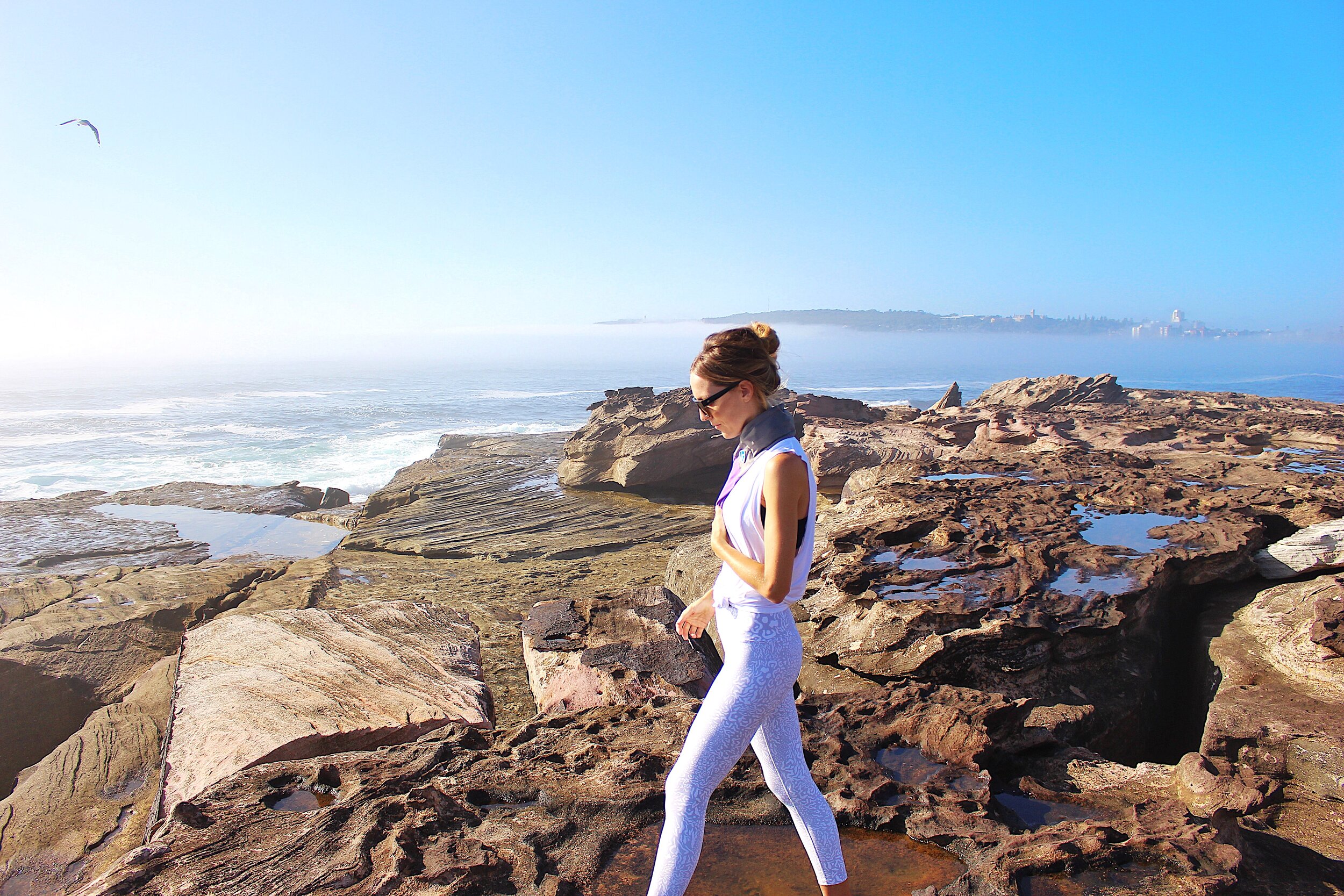
A little about my journey with exercise from disability to now
At my sickest in hospital, and once I’d regained some movement I began exercising in my bed with really basic pilates type leg lifts that the hospital physiotherapists had given me. I then progressed to the floor on my exercise mat to do longer sessions, my mum or Ben lowered me down and back up again. Then I moved to a walk belt (a rather glamorous large velcro belt that went around my waist with handles so someone could follow me around and grab me in case I fell), while doing laps of the rehabilitation halls. Then I was gifted my first ever walking stick which was the goal for the physics to discharge me, and as I got more mobile over the months, I eventually made it to my local gym for bigger strength workouts, then once I was strong and mobile enough to shed that walking stick, I was away, and I began walking daily along the coast and it was pure freedom. But walking still wasn’t smooth. It was clunky and awkward for months, maybe people couldn’t see it but I could feel it. But once it became smooth, that was incredible, and I’ve walked ever since.
These days I can run for small distances, skip, jump and move my body in ways I only dreamed of in those years as I clawed my way back to ability. I remember back then laying in my hospital bed unable to do anything and I would watch the cleaner come in to my room whistling and so happy saying “don’t worry you’ll get better honey, you’ll get better”. I would think that’s all I want to do, I’ll be so happy if I can I just walk again, but to be able to run and gain so much of my ability back has been amazing.
But none of it was ever easy and I never ever felt like doing any of it. Every day was a battle against my own body and the fatigue was overwhelming, I could have slept all day and all night. I was also dizzy, nauseous, and my vision was a blur with fuzzy double vision, and nystagmus, that exasperated my balance and nausea. I remember shutting my eyes so much to get a break from the constantly moving world around me.
But I also had another crazy symptom going on, I called them “freezing episodes”. About every 30 seconds, my whole body would go haywire for roughly 30 seconds. All of my symptoms would worsen for that time, my eyes blurry, speech more slurred, arms and legs jerky and unable to co-ordinate even more and I couldn’t do anything except ride them out which was super awkward if someone was talking to me. Then like a light switch I’d be back again. My neurologist said they were coming from deep within my central nervous system.
These “freezing” episodes made it so challenging to talk with people as I couldn’t hold a conversation, I missed laughing and joking with Ben so much. But it also kept me pretty housebound as I couldn’t go out walking or to the shops because I might have one in the middle of the road or while someone was serving me. For those months I suffered with them it was really hard, I wondered if they’d ever go away and what my life would be like if I was left with a permanent disability. It really put so much in perspective and made me realise how lucky I was to have a fully functioning body before diagnosis. I remember crying a lot. As you can imagine it was super challenging and frustrating and involved a lot of determination and patience with my body, and I mean A LOT of patience. Some days I would get so angry and frustrated at it all but I knew I had to keep showing up every day and working on my recovery.
If you can imagine your mind wanting your body to go one way but your body doesn’t get the message and flies off uncontrollably in the other direction – that was me for literally months. Even trying to turn the tap on or wash my own hair took months to relearn. But eventually as the months passed my co-ordination came back, the freezing episodes subsided and I was able to do my old walks along the coast that I loved, unaided. Now I can run down the stairs handsfree and do a light jog if I want too but it’s taken me years.
The two main things I believe helped me recover were Tysabri and being on the overcoming MS program, but also my commitment and determination to exercise every day.
I believe exercise and maintaining strength and ability with MS go hand in hand, it is a crucial part of our wellness, vitality and our quality of life. When my body is strong I can feel it – it’s easier to lift things, or squat down to grab something, and I have better balance, stamina, thus a better mood which all helps increase my confidence, making my life easier.
So here’s what I know…
-
Start small and start somewhere
If your struggling with motivation my advice is to just start small and start somewhere. It’s not about all or nothing with MS. It’s about balance, moderation and doing what you can do. The hardest thing about anything in life is starting, but once you’ve made your first appointment or gone for your first walk it’s so much easier. You could do a light walk around the block, some youtube beginner fitness tutorials, fitness apps or joining pilates, yoga or the gym. If you join the gym I recommend at least one appointment with a personal trainer to show you how to use the equipment properly and give you a good beginner workout routine. I did this and said I wanted a full-body workout that’ll keep me walking and it was great.
-
Don’t think about it – just do it, mornings are best
The more I’ve procrastinated in the past the least likely I am to go and fatigue can derail the best intentions, so I just get up in the morning, have some breakfast and get going. By doing your exercise first thing in the morning you have less time to talk yourself out of it. It also sets you up for a really productive happy day (more blood flow). But also, if we busy ourselves with other things that can drain our energy we may not have anything left to do a proper workout. If you want results it’s gotta be a priority.
-
Do what you love & you’ll want to do it more often
Make it fun for yourself. It doesn’t have to be the gym or cross fit – you do you! do what makes you happy. You might love mountain biking, hiking, swimming, martial arts or tai chi. Experiment with a few things you fancy to find what works for you and you’ll find it won’t be such a hurdle. Also, listen to your fav podcasts for inspiration or audiobooks, or make a fun empowering playlist to listen to for motivation.
I love walking by the beach so I do that the most and music always gets me motivated or a good podcast. I recommend a music app like Spotify, it helps you find new music and stay inspired.
-
Nothing tastes as good as walking feels
Write this on your kitchen wall, bathroom mirror or fridge so it reminds you every single day. I said this to myself so much in the first year and it really helped me stay on track with the OMS diet and exercising.
-
Exercise increases blood flow boosting energy & cognition
This is the best! more blood flowing around your body carrying more oxygen up to your brain enhances cognition and will energise you plus it will also make your skin glow. When I exercise more ideas and inspiration will start flowing and I feel more switched on and energised.
-
Push through the fatigue if you can but don’t over do it
This is a tough one and sounds brutal but it’ll help you get better. Even if you commit to only 2 sessions per week keep it up. But don’t thrash yourself, balance it with rest periods too. Tune in with yourself and if you’re too shattered then adjust to smaller sessions or fewer times per week, but the benefits far out way not doing anything.
I remember for years after diagnosis I had the most intense fatigue but I loved my walks so much I went anyway and pushed through it. I have vivid memories of dragging my tired body up the steps at the end of my walks, but I always took my bus card in case I hit the wall and couldn’t make it back. But it meant my work was done for the day and I could rest in the afternoons, plus I had a better mood and sleep.
-
CONSISTENCY is everything – don’t ever give up!
This is probably the most crucial point. CONSTANCY IS KEY especially if you want results. This quote has always stuck with me…
“It takes 4 weeks for you to notice your body changing, 8 weeks for your friends and 12 weeks for the rest of the world. Give it 12 weeks, don’t ever quit!”
For me in the past to see optimal results was when I did about 2-3 gym sessions per week and walks in between, but honestly, anything is better than nothing. However, the only way I’ve ever achieved a toned fit body or seen results is by being consistent and pushing myself a little.
-
Engage your muscles to see results
I’ve found that lifting my head high, while engaging my core and straightening my back with my shoulders and arms relaxed works great, and walking at pace.
-
Increase your water & protein intake to see results
Make sure your drinking plenty of filtered water as you’ll be perspiring more and dehydration makes symptoms worse. You’ll also see results quicker if you focus on getting enough protein in your day. Australian guidelines recommend about 46 grams of protein per day for females aged 31-50 years.
Great sources of protein on OMS are egg whites (omelettes), raw nuts like almonds, oats or oatmeal with almond milk, hemp seeds, legumes, beans and seafood. Or vegan protein powders if you like them. Protein helps to build lean muscle and building muscle will burn more fat at a resting heart rate.
-
Track protein & nutrients
By tracking your foods you can see your intake of protein, calcium, fats, b vitamins, iron, etc. It really helps to make sure you’re getting enough of each and of course not over doing saturated fat (if your on OMS). The last thing you want to do is deplete your body. I used Chronometre for years, but if you have a recommendation, please let me know in the comments below.
+ Leave a comment
View comments