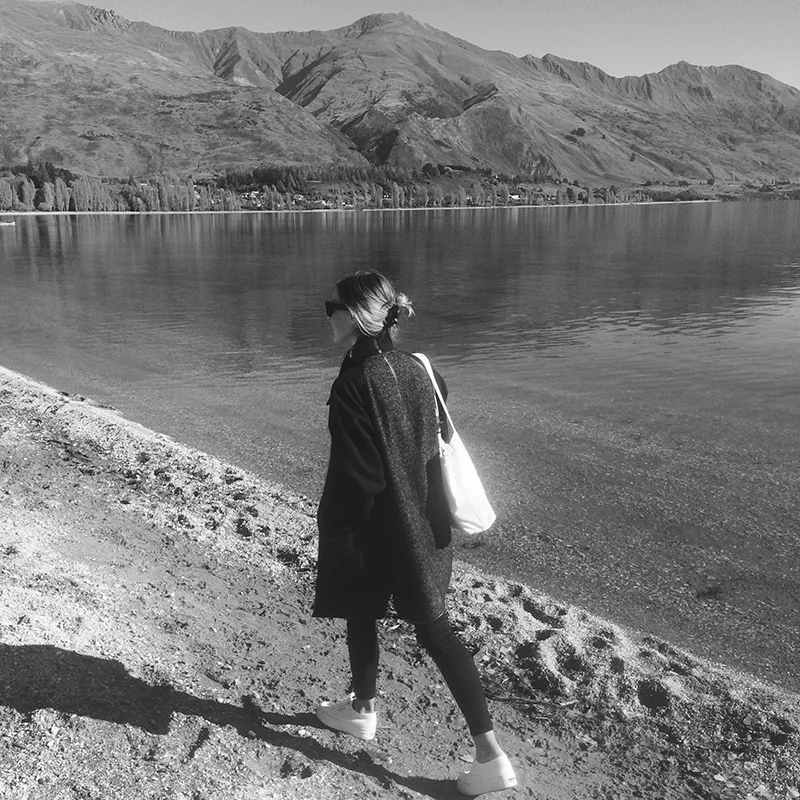
Walking by Lake Wanaka, NZ
“What other people think of me is none of my business”
– Dr Wayne Dyer
Growing up and through my twenties I never saw myself needing a walking stick, maybe when I got older? but I always considered myself fit, strong and healthy. Pre-diagnosis I would to run long distances quite often and go on long walks with my friends. I loved zumba and yoga and I did power plate 3 or 4 times per week. So after my MS diagnosis, it was a completely surreal experience being stuck in a hospital bed and immobile. I kept thinking I’d wake up from a nightmare, I would literally dream I was walking, running even, and then I’d wake up and realise my reality was much different. As you can imagine, I was fairly hysterical there for a while and looking back, in a state of shock.
About 4 weeks after my relapse I was in the rehabilitation unit and was visited by the neurologist. If you’re familiar with hospital stays, you’ll understand how it goes, usually the head doctor, for a while there, I had a few additional neurologists as well, who are accompanied by a few junior doctors or students, so suddenly, you have a little team of people around you all listening intently – not confronting at all when your in such a vulnerable state! I’m not sure how they thought this would be healing for me at all, but I understand I was an interesting case for them.
Anyway, that was almost a daily occurrence for me for 9 whole weeks. At this stage, I was learning to walk again but I was still “freezing up” so I had to wear this great rehab accessory called a walk belt, which is a massive velcro belt with handles on each side – yes, I know what your thinking, I looked super hot. Bens mum was visiting me at the time and we would go on walks together around the rehabilitation corridors and whenever I would “freeze-up” she would grab me from behind so I didn’t fall over. My walking was slow and awkward but these freezing episodes were pretty scary – suddenly and without warning my whole body completely stiffened up, and I wouldn’t be able to move my feet – they would feel as if they were stuck to the ground. Combined with loosing all sense of balance, blurry vision, slurry speech and jerky movement if I tried to move or speak.
The doctor said to me I’d most likely have to leave rehabilitation with a walking aid of some kind, and I was devastated. In my mind I thought that that was it – I’d need a walking stick all the time now. I didn’t understand MS at the time and I didn’t realise how much better I was about to get so I couldn’t even picture it. I was so determined to walk again I didn’t expect that I would ever have a walking aid, I thought I could do it on my own. I remember telling him my specialist thought the freezing episodes would go away soon and I’d be fine. But he hung his head and said nothing. Looking back he probably knew I was going to need it long term, maybe he just couldn’t tell me.
However after another week and numerous freezing episodes later I decided in order for me to be independent when I went home and not fall over and hurt myself I needed something to help me. So my very kind physio gave me a walking stick from the rehabilitation gym. It was floral pink and the only one she could find. Oh my lord I looked like a nana! Anyway, it was only temporary, I kept telling myself.
After Bens mum left I was facing my first week in rehabilitation alone. So I had to start using a wheelchair myself for the first time and this one had flat tyres, not the easiest for someone with thin arms and limited strength. MS had sucked all my strength and I was still trying to get it back. I nicknamed myself mrs puniverse in hospital as my weight plummeted to 43kg, 10kg’s lighter than my normal body weight, so at 5’8 tall that was incredibly tiny for me. It was something we could laugh about at a time when laughter and happiness had been cruelly replaced by sadness and worry. The weight loss I would say was mainly because of muscle wastage and at my worst an inability to feed myself or tell people I was hungry not to mention the stress of it all.
Just before I left rehabilitation, I had to have an assessment by another rehabilitation doctor who was famous for his terrible bedside manner and instilling nervousness and terror in his med students, as I’d heard through my physio’s. On his visit he made me do a series of things, including getting down onto the floor and getting up again. But he then made me walk around rehab on my own without a walk belt which I’d never done before and I was absolutely terrified of falling over. At the level of disability I had I felt incredibly fragile and vulnerable both physically and emotionally. MS had put all my emotions on my sleeve. He yelled at me to try and get me to push through the freezing episodes but I just couldn’t and I ended up falling on him. I don’t think he realised that I actually did want to walk properly again and no matter how hard I tried I couldn’t push through these crazy “freezing” episodes. He just made me so so angry and upset, I felt so humiliated. He then asked me what I did for work, I told him I worked in swimwear as a production manager. He told me to forget about that and go back to customer service after he asked me why I would ever work in the fashion industry. He told me I looked no different to other people and no one would know I had MS, in a very flat almost condescending tone like it was what he said to all his MS patients. It was all very confronting like I had been dealt a series of hard truths in one huge dose. I literally felt my old life crumble away as a new life of disability, discrimination, worry and uncertainty took over.
One of the young nurses visited me afterwards with ice-cream because she could see how upset I was. And my physio told me she had stood behind me the whole time. The staff at this rehab centre were just so lovely, they had the biggest hearts. These girls were also my age, and were baffled as to why and how I got to where I was. They were inevitably shocked when I said this is MS and I have no idea how I got it. One day I was normal, and the next I wasn’t.
I finally got home and Ben and I would go for walks together daily. I walked to the shops with him once which was huge for me. I told myself “what other people think is their problem and none of my business” and my long distance vision wasn’t very good so I couldn’t really see people’s faces anyway. Also I hadn’t developed the ability to look around while walking so my focus was purely straight ahead. However, on this occasion, a group of young guys walked past me and laughed, I don’t even know if they were laughing at me but I felt so vulnerable I took it on board. It took a lot of adjusting to being a young girl with a walking stick. Here I am surrounded by young, fit, healthy, beautiful people in what’s meant to be my prime years and I feel like an 80 year old woman. I had been so highly functioning before my diagnosis and thrived in my independence. I’ve since read that most people who have MS are very highly functioning previously and hate relying on others – maybe it’s something in our personalities.
When I was out and about people liked to ask me what happened to me. I think they expected me to say I had some sort of accident, but when I told them the truth they’d most likely go quiet and look at me sympathetically. But I didn’t want sympathy, I just wanted to get on with healing and getting better. I had an experience once where I froze-up when I was being served at the chemist, and I don’t think they initially saw my walking stick. Usually when I froze up in front of people they’d look at me strangely trying to figure out what’s happening, as my speech is compromised and my body language becomes jerky. I essentially loose the ability to communicate with them in all ways and have to wait out an awkward 30 seconds till I come right again. So once my episode subsided, I told the lady serving me that I had MS, she then told me her daughter has it to. They quickly scrambled to put my items in a bag so I could carry them with my stick and were extremely apologetic.
As my confidence grew I was walking longer distances still with the walking stick and it felt so liberating to have some independence back. I was able to do one of my old walks around the coast that I had dreamed about in hospital. I had a couple of experiences where I would freeze in the middle of the road, luckily I live in a fairly quiet neighbourhood so I got lucky with traffic. I once had a young man toot profusely at me when I’d frozen in the middle of the road. He wanted to turn in front of me and was trying to signal to me to walk ahead, but of course I couldn’t. Cars would literally stop to let me cross the road – probably because they’d taken pity on a young girl with a walking stick?i’m not sure, or they’re just being polite but if you can’t move, you can’t move!. I somehow signalled with my hand for them to keep going. I’ve had older women ask me if i’m okay or did I need help and also tell me I’m very brave, they were the loveliest. They had the kind of empathy and wisdom that many older people have, from a life of experience. But the best of all were the young kids. They loved a good stare. Turning their heads while walking past me, to a point they couldn’t possibly oscillate that head any further.
When I walk to the beach from my apartment, I walk past a cafe. I must have passed that cafe dozens of times. I recently went in there with my mum and they were asking me how I was going and what had happened to me, genuinely interested. I think all in all I’ve been really surprised by the attitudes here. People are mostly concerned and want to help you. It’s very comforting to know that you have support in your community, especially in people you don’t know.
I have finally gotten to a point where I can get away without the walking stick now. I get a little warning when I’m about to freeze-up, my eyes go blurry. The episodes aren’t as aggressive as they use to be so I just stand still and wait for them to pass. Also they aren’t happening as much anymore and I can even walk through them now (somewhat awkwardly) – huge progress! I’m taking it as a sign I’m getting better and that’s made me a pretty happy lady.
+ Leave a comment
View comments